
Two friends relive their memories, make new ones—and offer a recipe for you to do the same!
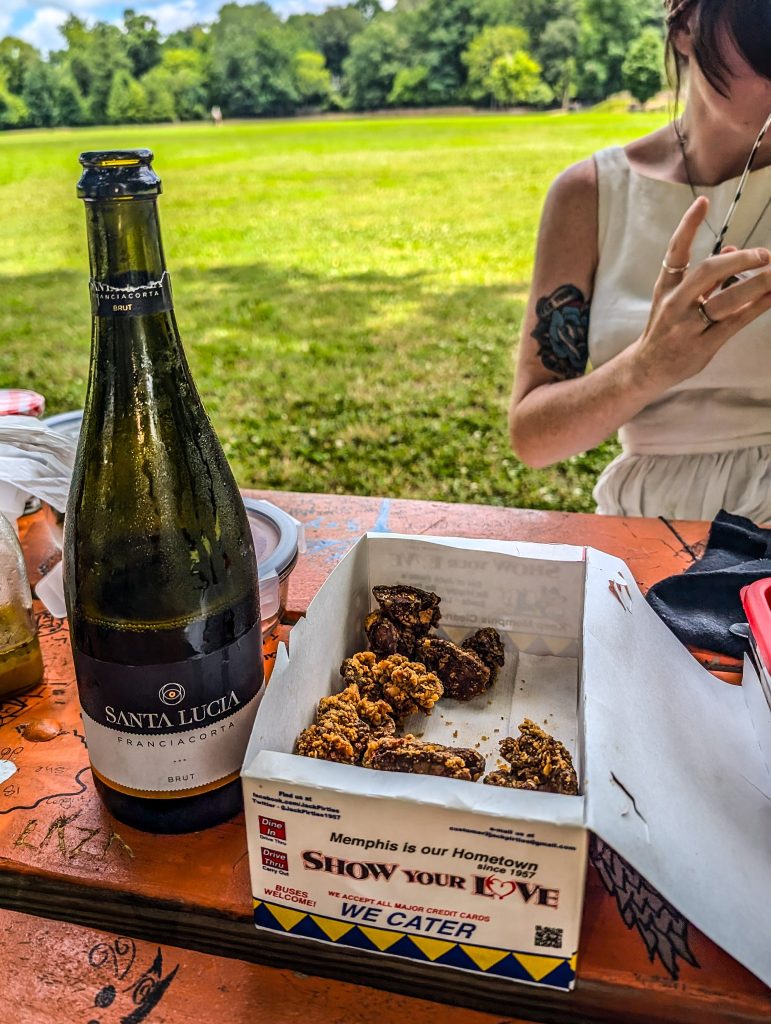
Epic volumes have been written about fried chicken: light or dark meat, breading texture, oil preference, seasoning, sauces, marinades, tenders or off-the-bone. But I say: Go deeper. Delve into the depths of the fowl and find the often overlooked treasure—the liver. And after you find it, please bread it, drop it in hot oil, and sell it to me and my friend, Tim Barker, so we can eat it on our quest to find our favorite fried chicken livers in town.
In human brains, the hippocampus engenders extra-vivid memories about food. Scientists say this harkens to our hunter-gatherer days. Our memories of food are so evocative because our brains help us return to that place where we found a meal, the means for survival.
Since we left the wilds many generations ago, our memories of food pull us back to places of comfort, home, and family.
Tim (a chef and restaurateur) and I (with a background in food service), talk often about food and what it has meant to us over the years. An openness to offal isn’t bred into every person, and fried food has been maligned as unhealthy. Despite this, we decided to return to our childhood roots and employ our ancestral right to capture and forage by exploring what Memphis has to offer in the way of fried chicken livers.
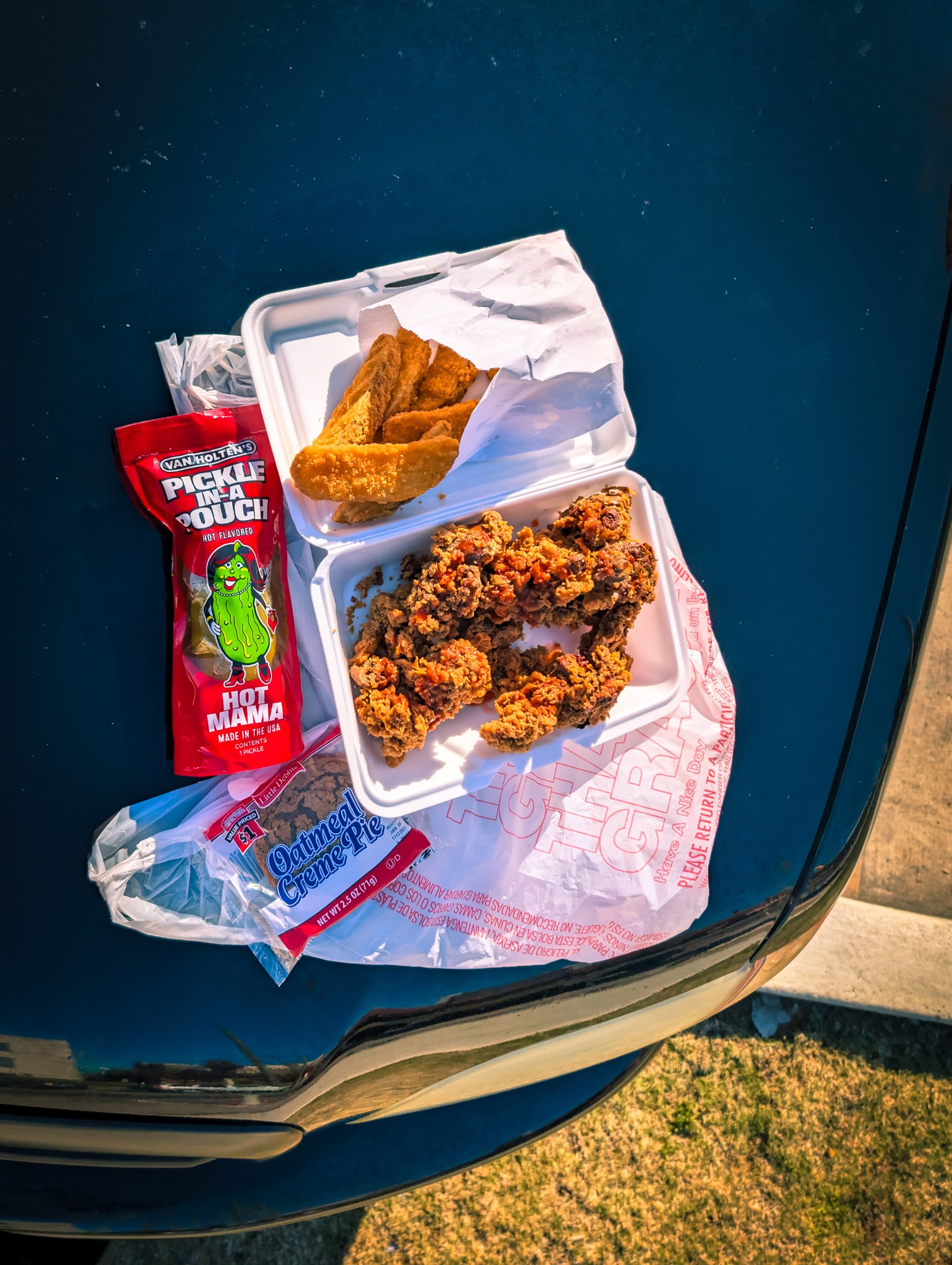
The One—the convenience store attached to the Shell station on the corner of Danny Thomas Boulevard and Dr. Martin Luther King Jr. Avenue—is new and maybe too well-lit. The space is a paradox of choice, presenting us with a whole family’s worth of Van Holten’s pickle-in-a-pouch pickles alone. Gazing into the browns, reds, and yellows of the Chester’s Chicken hot bar, we chose livers with tater logs, a classic combination. Tim rolled the dice on a pizza stick, which he described as a “toothsome pastry.” We enjoyed our fare with a pickle-in-a-pouch each on the hood of his SUV in the high afternoon sun. Tim sipped a watery domestic beer, and I relished a glass bottle Coca-Cola. A gas-station meal is not for the faint of constitution. The sour pickles broke the grease of the livers and the logs. The bubbles from our drinks helped us wash it all down.
When I worked at a coffee shop downtown many years ago, I was told by Tawanda Pirtle herself that the way to order the fried chicken livers at Jack Pirtle’s is to ask for them to be “double fried” (also called “fried hard”). On mine and Tim’s second outing, we ordered at the drive-through of the Pirtle’s on Poplar Avenue near Cleveland Street. We hoped that through the crackling of the speaker, the ambient noise of the intersection, and the chaos of the cars in line behind us, our 12-piece dinner order would be heard loud and clear. When I opened the box to reveal the livers, fries, biscuits, and a container of gravy, we were elated. Tim had a vision of a chicken liver biscuit with mustard and pickles. Since that particular Jack Pirtle’s location is drive-through only, we brought along a bottle of Riesling from Rootstock and had a picnic in Overton Park. The tang and acid of the pickles and mustard brightened the savory bread and meat—adding a welcomed dimension to the meal.
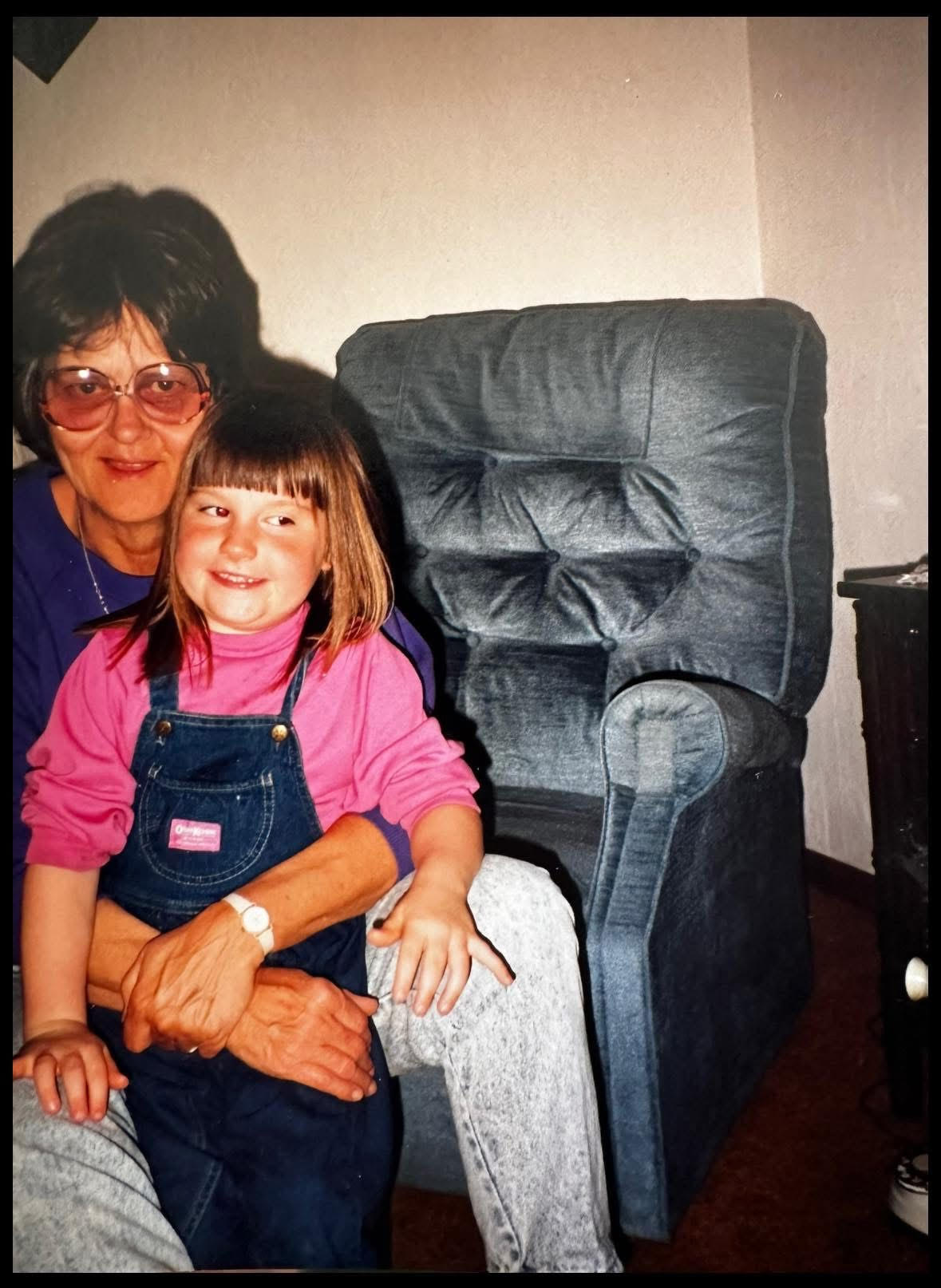
Photo courtesy of Shannon Curtis
What we were both looking for, in addition to the good ol’ iron-rich, savory, crunchy goodness, was to touch the memory of some time and flavor that we can’t access anymore while, at the same time, creating new memories that build off of that foundation.
I’m named after my maternal grandmother, Shannie. Granny Shannie. My older brother and I spent most of our summers and vacations with her and our grandfather in Norfolk, Virginia. Their house and care were some of the only consistencies in our childhood. The Curtis/Deaton family are true working-class, simple folk. Granny proudly calls herself a hillbilly (being from Breathitt County, Kentucky) and Pa was born into the Dust Bowl. Our meals reflected their Depression-era childhoods, with a healthy dose of mid-century convenience. It wasn’t the pork chops and sop or the fiesta casserole that I dreamed of when we were back home with our mother.
For me, fried chicken livers are the essential dish of my youth.
Granny never told me to step back from the stove. She never warned me about the way hot oil explodes when you place a cold and wet piece of meat into it. I stood with her in between the bowls of buttermilk and cornmeal and the cast iron skillet, watching as she turned the pieces over using a dinner fork. After we ate, there were always a dozen or so leftover livers, which Granny would put on a folded paper towel on a plate and leave front and center in the refrigerator next to the tubs of Country Crock and Cool Whip. To this day, whenever I visit Granny, who turns 89 this year, she makes us a mess of chicken livers for supper with cucumber slices and potato salad.

If the weather’s nice, Tim’s father, Tony, can be found fishing at the pond in the wilds of Weakley County, Tennessee. When Tim was younger, he would accompany his dad for some catch-and-release bonding time. They’d stop at the 3J’s convenience store on the way to pick up supplies: fried chicken livers and gummy worms for themselves, and raw chicken livers and earthworms for the fish.
When Tim learned to drive, chicken livers became a go-to snack in small towns, where gas stations stand in as alternatives to corporate fast food.
Who wants a Whopper and fries when you can get hot links and tater logs? At home, chicken livers fried by Tim’s own Granny were served in much the same way as mine.
We don’t have to remember where the slowest, fattest animals drink from the stream.
Sharing memories with a friend over a plate (or to-go box) and making new ones is a kind of method of survival.
We do have to remember where we come from and keep those precious traditions alive. When Tim and I discussed what his recipe for home-fried chicken livers would be, it was difficult to improve on what our Grannies had already perfected. Like the trips to the gas station and Pirtle’s, it was what we chose to pair them with that enriched the meal. Thus, his recipe elevates our beloved dish from a recreation of what we once knew to a celebration of who we are because of our memories.
Recipe: Fried Chicken Livers
Adapted from the fried chicken recipe at Edge Alley, the (now closed) restaurant that TIm Barker owned
Ingredients
Livers
- 2 pounds fresh chicken liver (available at Cash Saver), trimmed of excess fat and halved laterally (After discarding small pieces and trimmed fat, this should yield about 1.75 pounds.)
Marinade
- 12-ounce can Flyway Brewing light beer
- 1 teaspoon granulated sugar
- ½ teaspoon coarse ground black pepper
- 2 cloves fresh garlic, peeled and crushed
- 2 sprigs fresh thyme
- 1 sprig fresh sage
- 1 big pinch kosher salt
Dry Dredge
- 5 cups all-purpose flour
- 4 tablespoons baking powder
- 4 tablespoons smoked paprika
- 4 tablespoons granulated sugar
- 1 tablespoon cayenne pepper
- 1 tablespoon kosher salt
Wet Dredge
- 2 cups buttermilk
- 1 cup cold water
- 2 tablespoons Frank’s RedHot
Preparation
Combine marinade ingredients in a lidded container and mix well. Once mixed thoroughly, add the trimmed and halved chicken livers. Allow livers to marinate in the refrigerator for at least an hour (but no longer than three).
Whisk dry dredge ingredients together in a 9×11 baking dish and set aside.
Whisk wet dredge ingredients together in a shallow but wide dish (pie pan) and set aside.
Rinse marinated livers under cold running water and pat dry with paper towels.
In batches of 8-10 pieces, dredge chicken livers dry/wet/dry and fry at 160° in a cast iron skillet with just enough vegetable oil to cover. Cook for 4 minutes and remove to a rack to drain and rest.
Serve chicken livers with pickles, crudites, marmalade, etc. Or try them on a biscuit with mustard, crunchy veggies, pickled red onions, and sliced tomatoes (in season). They also are great in a banh mi or a lettuce wrap.
S.E. Curtis has many devotions, including unsung Southern foods, bike commuting, lyrics to sad songs, extra olives in her martinis, Irish short fiction, and the rosary. She has written for The Bitter Southerner and Mashable. However, she tends to keep her ramblings to coffee-stained notebooks and her Notes app. @s_e_curtis
Tim Barker is a chef, restaurateur, consultant, and photographer. He’s also a coffee snob, sparkling-wine enthusiast, and avid supporter of a Weiner Wednesday. A real Renaissance man. @timabarker